Two lattes a day at nine dollars each is eighteen dollars, which is $126 a week, which is a shade over $6,500 a year. Every man who has ever bought a serious espresso machine has performed this arithmetic out loud, usually for a spouse, and always as if disclosing a shrewd position in municipal bonds. The machine is $2,800. The grinder — there will be a grinder; nobody mentions the grinder in the first meeting — is another $900. Divide it out and the whole rig pays for itself in a little under seven months. This is the founding lie of home espresso, and the strange thing is that it turns out to be roughly true.
I did my version of the math in the drive-thru line, eleven cars from the window, at 7:40 on a Tuesday. The man in the Tahoe ahead of me appeared to be ordering for a middle school. I had been in line fourteen minutes and would be in it nine more, long enough to compute my annualized latte spend twice and get the same answer both times. Somewhere between the Tahoe and the pickup behind me flashing its brights, I stopped being a customer.
The notebook years
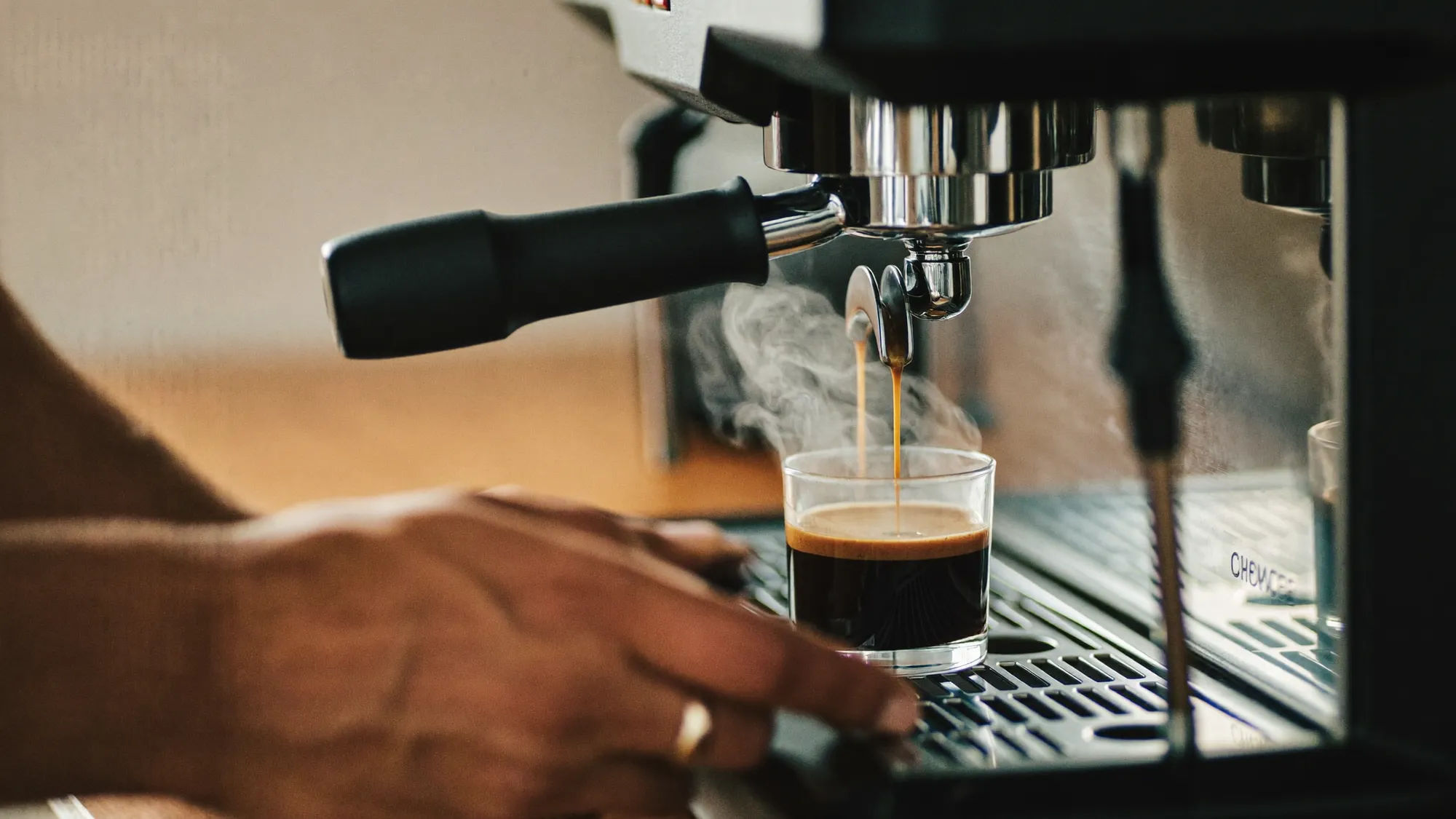
The target is eighteen grams of coffee in, thirty-six grams of espresso out, in somewhere between twenty-five and thirty seconds. That is the whole game. It sounds simple the way golf sounds simple. I bought a scale accurate to a tenth of a gram. I bought a thermometer. I started a notebook — an actual paper notebook — in which a reasonably successful adult recorded entries like “18.2 in / 41 out / 22 sec / sour” and, three lines later, “tightened grind. still sour.”
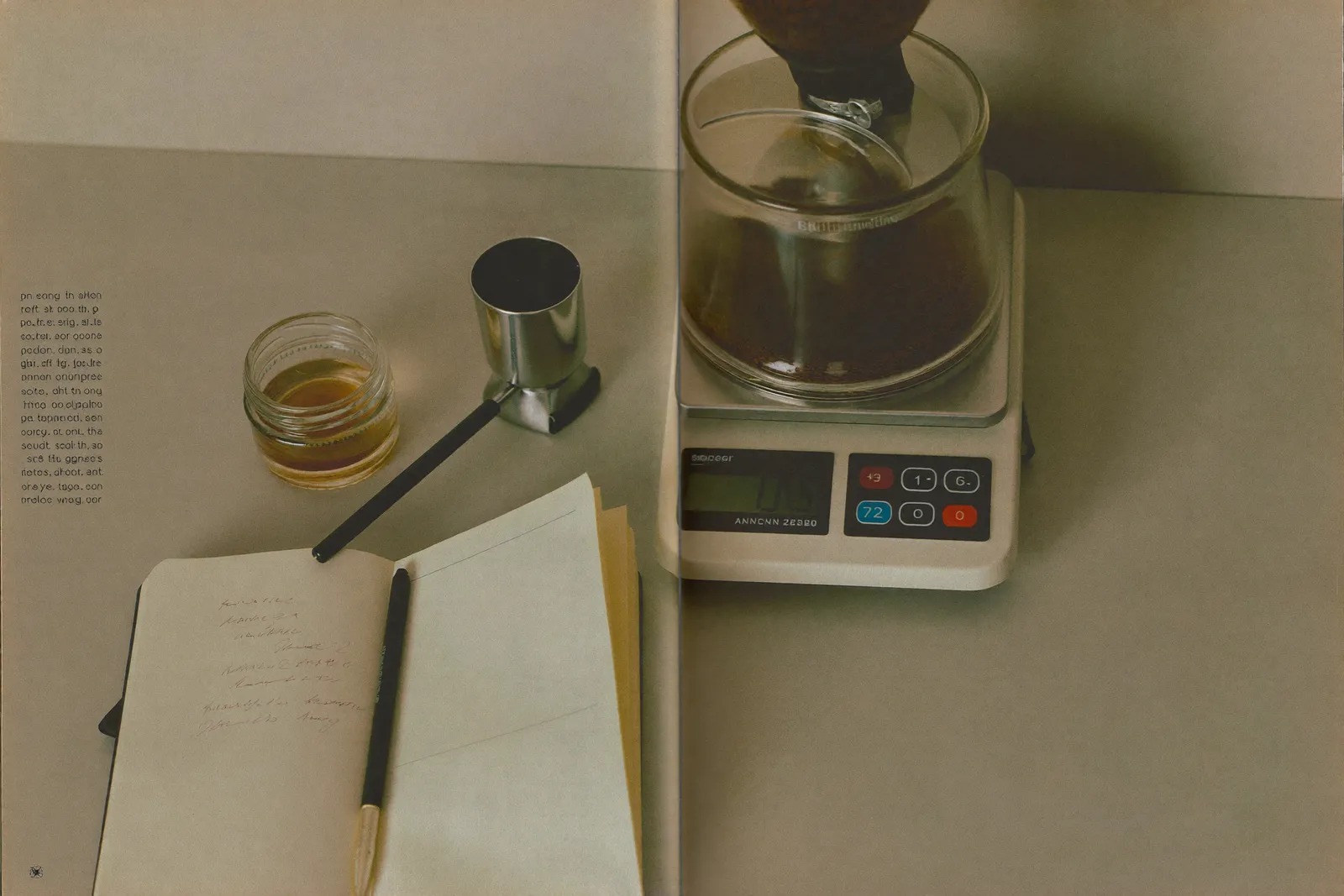
The notebook does not record moods, but you can read them in the handwriting.
Milk on the ceiling
The first three weeks produced espresso in the technical sense only. Shots that tasted like a nine-volt battery. Shots that dripped out over fifty seconds like a bad faucet. One shot so aggressively sour I checked the bag for a recall notice. Then there was the morning I opened the steam wand before the pitcher was under it, which is how I learned that milk, sufficiently pressurized, travels. There is milk on my kitchen ceiling. It has been painted over. I know where it is.
This is the founding lie of home espresso, and the strange thing is that it turns out to be roughly true.
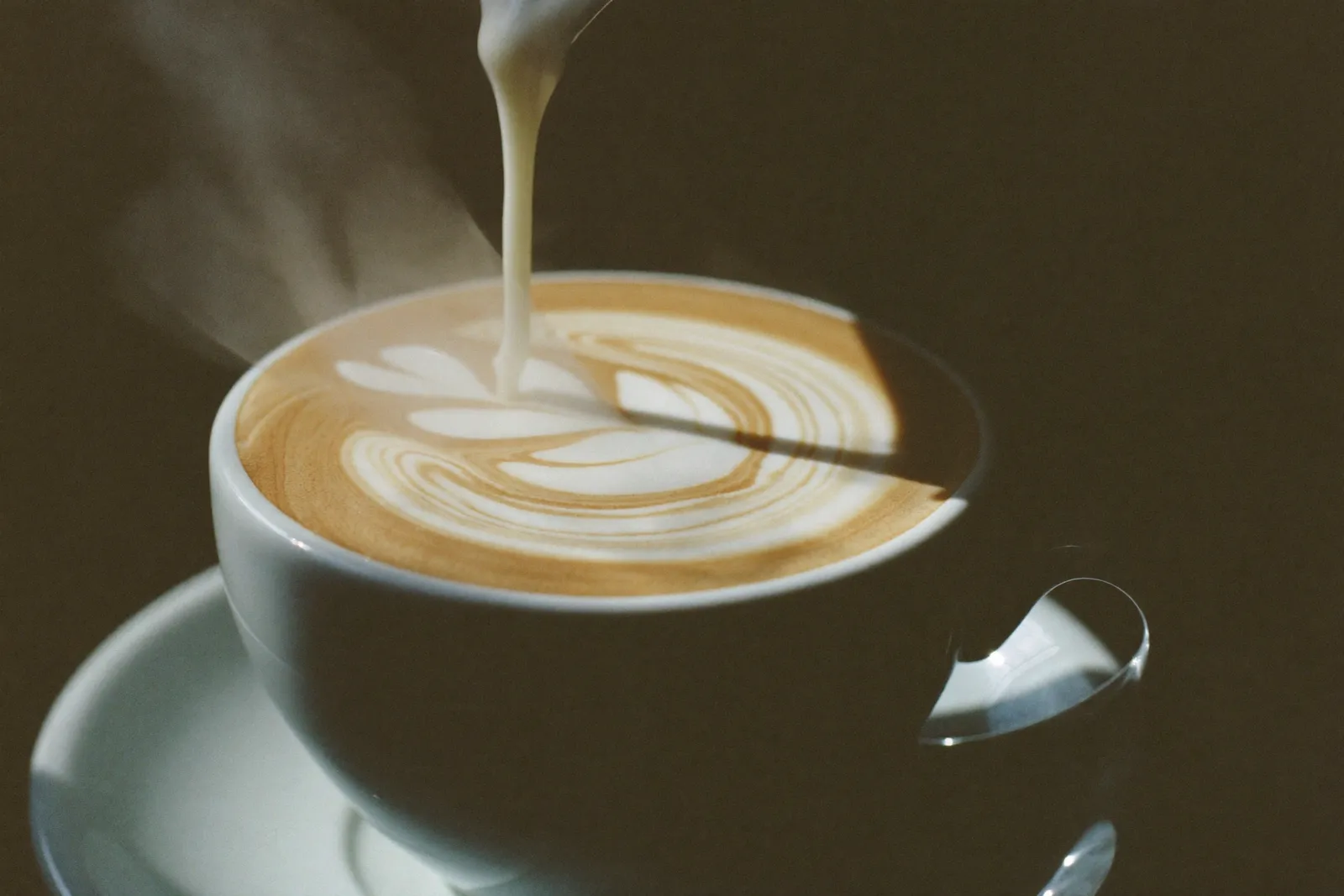
But dialing in is a hill with an actual top. One morning in week five, the scale said 36.1, the timer said 27, and the cup tasted like someone else had made it — someone competent, someone in an apron. After that the notebook entries get shorter and then stop, the way diaries do when things start going well. The latte now takes four minutes, start to finish, and it is better than the nine-dollar one. It is consumed in slippers, at the counter, over the newspaper, with no Tahoe in sight.
The new ledger
There is a barista at the old place — Dana, mid-twenties, forearm tattoo of what I eventually decided was a fern — who took my order every morning for two years. The order was a large vanilla oat-milk latte, extra hot, and Dana wrote it down each time with the professional neutrality of a court stenographer. We both knew what it was. I have not been back in eight months. I like to think the relief was mutual.
In March, the spreadsheet crossed zero. Amortization complete: by the drive-thru standard, the machine and the grinder had officially paid for themselves. I mention the spreadsheet because of what it does not show. It does not show the bottomless portafilter, purchased so I could watch my mistakes from below. It does not show the distribution tool, eight acupuncture needles in a walnut handle, $60. It does not show the beans, which arrive by mail from a farm in Huila I could not point to on a map, $26 a bag, roasted nine days ago — because eight is too fresh and eleven is a tragedy. It does not show the second grinder. There is going to be a second grinder.
The lattes were costing me $6,500 a year, and I was right to walk away from them; the math was never wrong. It just kept going after I stopped reading it aloud. What I bought was not a machine that makes lattes. It was a hobby that makes lattes, and hobbies do not amortize.
The machine paid for itself. Nobody said anything about me.