Never check a bag. Not for the wedding, not for the two-week trip, not for the January conference in a city you privately suspect of having weather. There are no exceptions worth discussing. That is the doctrine entire. Everything after this sentence is footnotes.
I arrived at it the way men arrive at most sound policies, which is to say late, and after a period of unnecessary suffering. Mine ended at a carousel in Newark, where I stood for fifty minutes watching a single golf bag complete slow, ceremonial laps, unclaimed, like a float in a parade nobody came to. My own bag, the display board explained, was in Zurich. I was not in Zurich. The airline’s app described the situation as “in progress.”
The baggage carousel is aviation’s purgatory. Not hell — hell has plot. Purgatory: fluorescent, procedural, faintly humid, a room where time is measured by a belt that squeals to life and dies again for reasons no one announces. And the men. Grown men, men who run divisions and chair audit committees, pressing toward the belt’s rubber lip and boxing each other out as if it changed anything. It changes nothing. I know because I was one of them, elbows soft but ready, defending eighteen inches of linoleum as though it carried a mortgage.
The bag comes when it comes; proximity is not a strategy.
The forty-liter argument
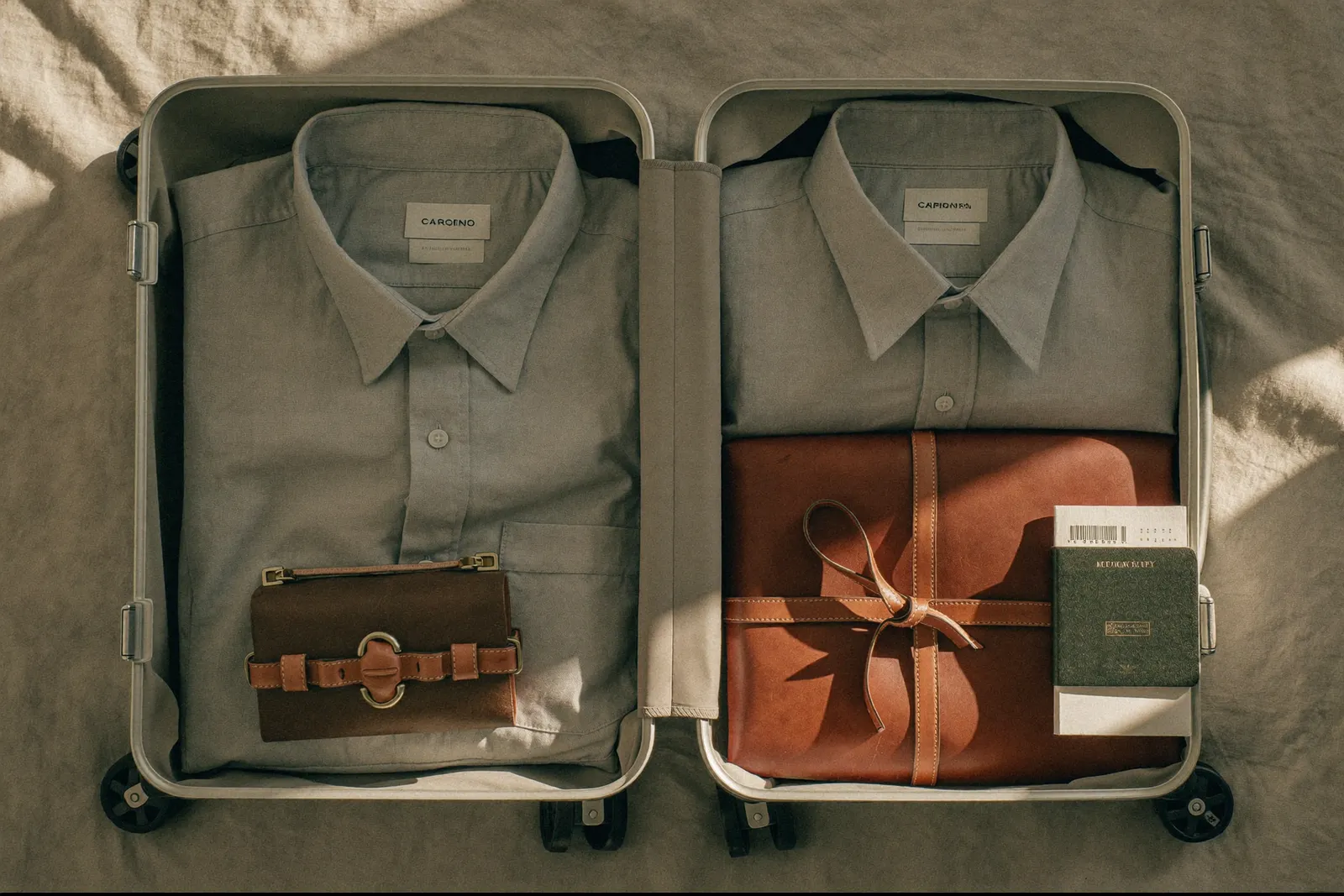
The cure is a number. Forty liters. A forty-liter bag fits in every overhead I have met and under most of the seats, and — this is the mechanism — it cannot accommodate your indecision. Most men do not pack for the trip. They pack for four hypothetical versions of themselves, and three of those men are not coming. The gym version is not coming. The version who dresses for dinner twice is not coming. Forty liters forces decisions, and the decisions are the point.
So: merino, which can be worn three days running without incident and dries overnight on a hotel hanger. Packing cubes, which sound like organizational theater and are in fact compression — the difference between a bag that closes and a bag that argues. Two pairs of shoes, one of them on your feet. One blazer, unstructured, navy or charcoal, that goes with everything you own, because at some point in your forties you quietly arranged for everything you own to go with it.
What stays home: the second belt. The just-in-case sweater. The full-size toiletries, surrendered years ago to the hundred-milliliter regime, the way one surrenders to daylight saving. If a trip requires more than forty liters, the trip is a move, and moves are a different doctrine.
The quiet machinery
Then there are the credentials, which nobody throws a dinner for. PreCheck. Global Entry. The lounge card. These are the medals of middle age: invisible, unphotographed, worth more than most of what got framed. You keep your shoes on. You keep your belt. The laptop stays in the bag like a secret. The line to your left — the one removing its jackets and holding its waistbands — was your line for twenty years, and you slipped out of it without a speech.
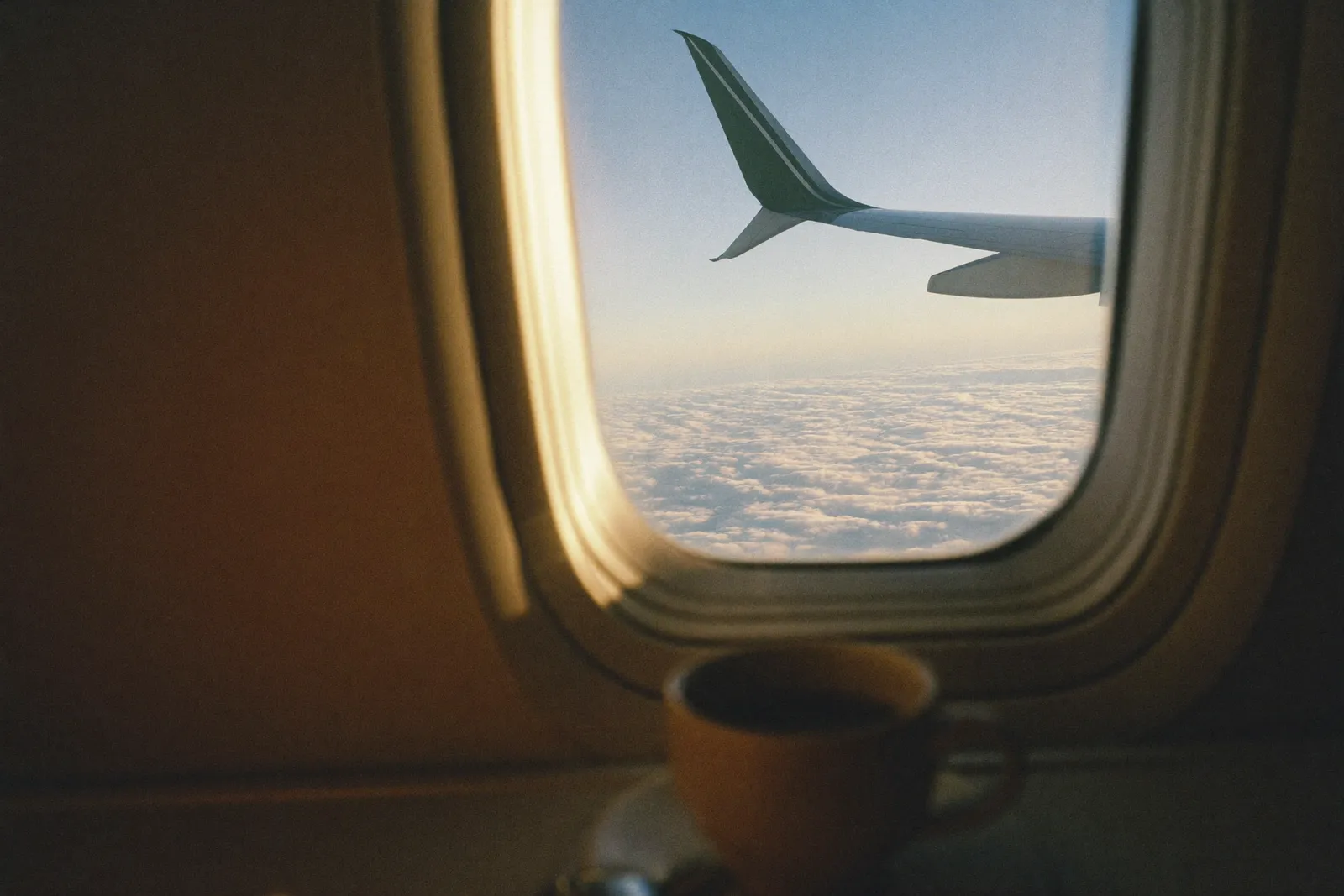
The lounge is not glamorous. The coffee is fine. The almonds have seen things. But it is quiet, and quiet is the last luxury with a functioning market. You sit near the window with a modest pour of something brown and watch other people’s planes push back, which is the closest air travel comes to contentment.
Belt seven
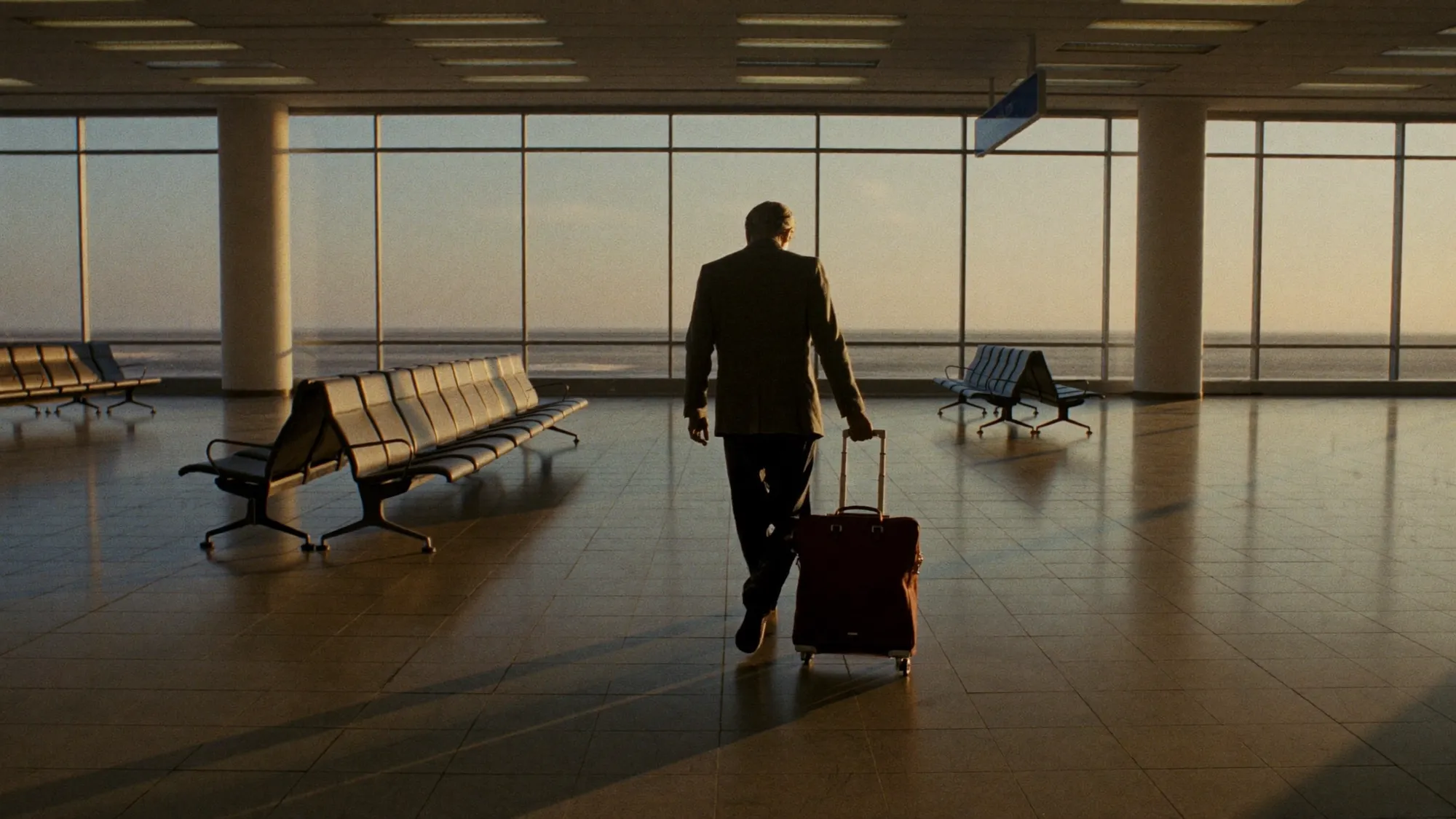
The payoff comes at the far end, and it is worth every sweater you left behind. Wheels down. Seatbelt sign off. You are up the aisle with everything you own on one shoulder, through the jet bridge, past the sign for baggage claim without turning your head. Your seatmate — a pleasant man, retired from packaging, told you twice about his connection through Charlotte — descends the escalator to begin his vigil at belt seven. You wish him well, silently, the way you wish a stranger well at a wake.
Eleven minutes later you are in a taxi. Nobody saw you leave. There was no announcement, no farewell tour of the terminal, no last drink by the carousel. You were at the party, and then, without a scene, you were not. The men at belt seven are still shifting their weight, still watching the rubber flaps for a duffel that is, per the app, in progress.
End of footnotes.