A confession: I spent twenty-five years pressing my thumb into steaks and pronouncing them perfect, and I never once had evidence. There was a technique, half-remembered from a magazine — poke the meat, then poke the pad of your palm below the thumb, compare the two firmnesses — and there was a tone of voice I borrowed from my father, who, I now understand, was also guessing.
The results were what you would expect from an instrument made of thumb. Some steaks arrived rare in a way that suggested the situation might still be reversible. Others were gray to the core, and I carved those at the table with the composure of a man who has quietly decided the word is “rustic.” Once, a rack of lamb managed to be both at the same time. I served it. I said “perfect.” Everyone agreed, because that is what guests do.
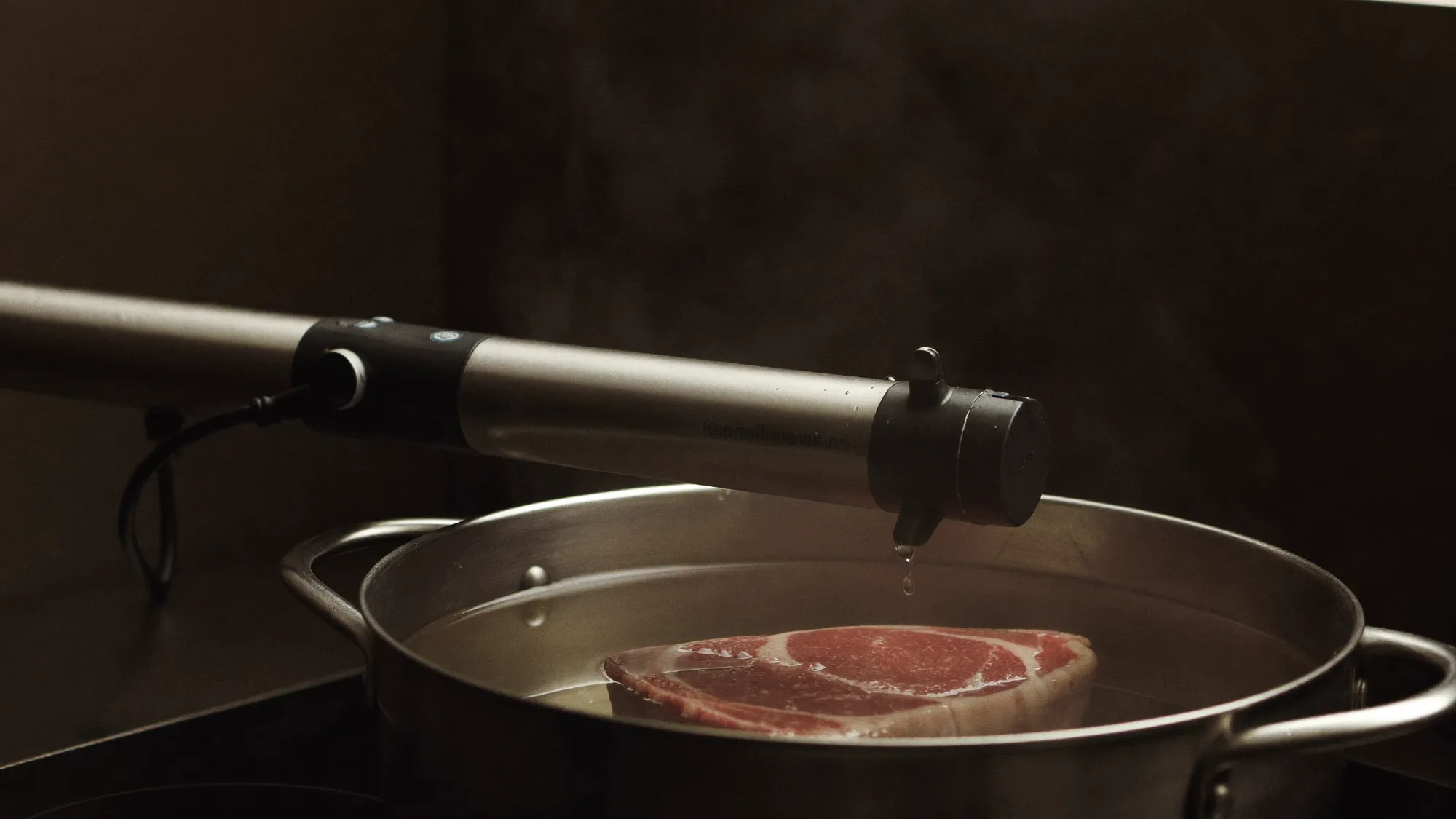
Then, two birthdays ago, my brother-in-law gave me an immersion circulator: a plastic wand about the size of a wine bottle that clamps to a stockpot and holds water at whatever temperature you name. It looks like lab equipment because that is what it is. Mine cost about two hundred dollars, which works out to eight dollars for every year I spent guessing.
The water does not negotiate
The operating principle fits in one sentence. A steak, sealed in a bag and lowered into water held at 54.5 degrees Celsius, becomes 54.5 degrees all the way through, and then stops. It cannot overcook. It is not being careful; it is obeying physics. The water does not care that the guests are late, or that you took a phone call, or that you wandered onto the deck and forgot the meat existed. At minute forty it is 54.5. At minute ninety it is still 54.5. There is nothing to check, which means there is nothing to get wrong. That took me a long time to accept.
For a man raised on vigilance — hovering at the grill, flipping too often, cutting into the steak “just to check” and watching the juices leave — this required adjustment. The first few evenings I stood beside the pot anyway, supervising water. The water did not need supervision. The steak was never the variable. I was the variable.
Thirty-six hours, unattended
Short ribs want thirty-six hours at 57 degrees, and I want to be precise about what that means. I lowered a bag into the water on a Thursday evening. I then attended six meetings, slept twice, answered a quantity of email, went for a run, and did nothing whatsoever to the ribs. The machine hummed in the corner of the kitchen at a volume slightly below refrigerator. On Saturday the ribs came out fork-tender and rose-pink to the center — a result braising never once produced for me, because braising involves judgment, and judgment was the problem.
The steak was never the variable. I was the variable.

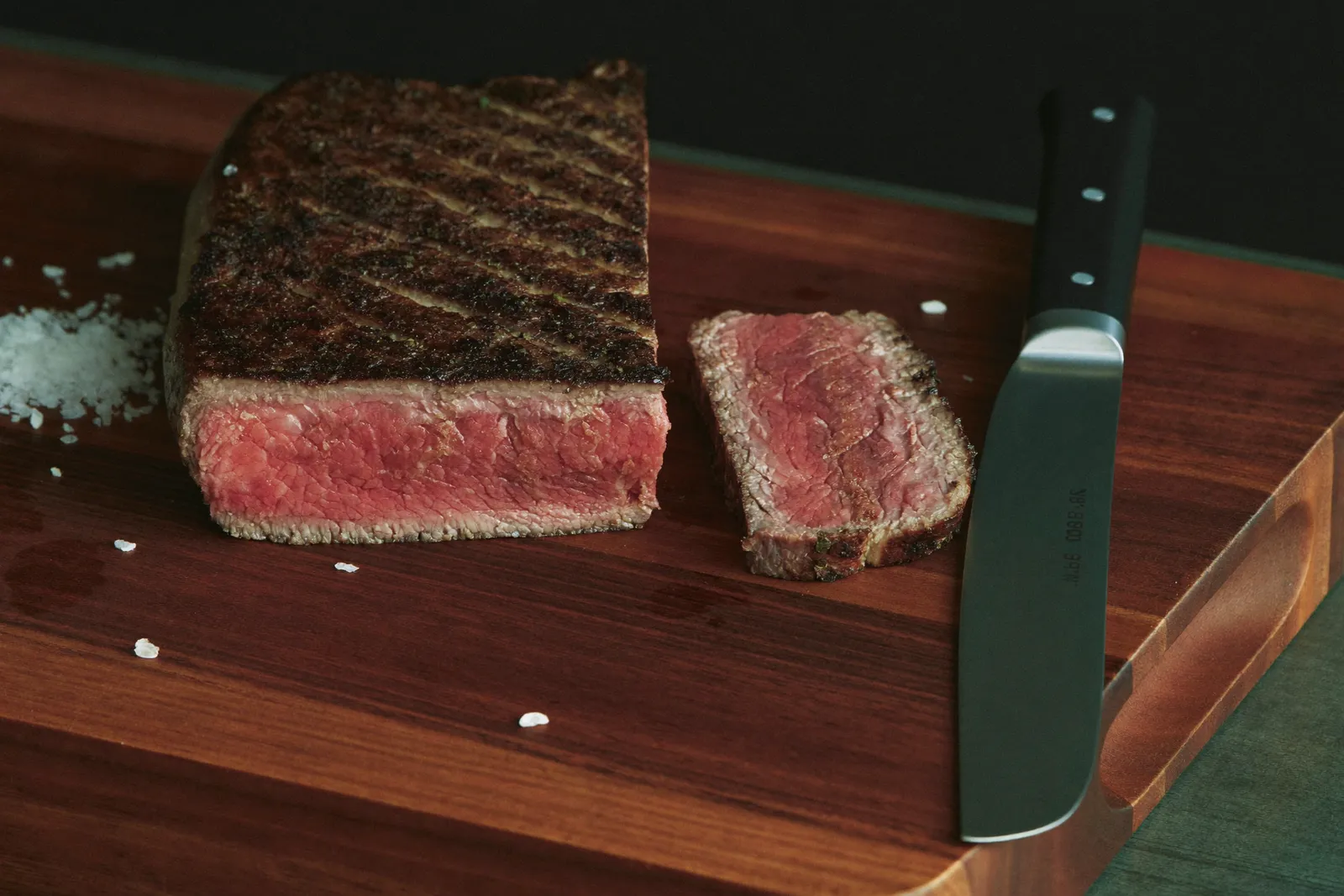
What remains is the sear, and I have come to treasure it. Ninety seconds in a pan hot enough to be frightening: smoke, spatter, the one moment when the evening can still go sideways. It is the last step that needs me, and I hold onto it the way you hold onto any job that has not yet been automated out from under you.
Insurance you can eat
The dinner party is where the machine earns its counter space. Cooking for eight used to mean choosing between hosting and cooking; you were either at the stove or at the table, and whichever one you chose was the one that suffered. Now the strip steaks sit in their bath, done, incapable of becoming more done, while I stand on the patio telling a long story at my own pace. Whenever we are ready — and whenever is now a real word — I sear, slice, and serve. Ten minutes, anecdote to table. The guests suspect nothing.
And I will admit the last part, since we are confessing. The machine’s company suits me. It does not ask how my day was. It has no opinion on the marinade and no interest in talking through the plan. I give it a number; it holds the number; we work in silence, like two men fixing a fence. Past fifty, that is most of what I ask of a colleague.
I still poke the steak sometimes, ceremonially. The water pretends not to notice.